You’ve probably tried it: pamphlets at the school gate at 1:30 pm, a banner near the bus stop, maybe a call to the principal’s office that went nowhere. Schools are where your future students spend most of their day, yet they’re one of the hardest places for a coaching institute to reach.
The reason is simple. Principals are pitched constantly, and most pitches offer the school nothing. A good school tie-up for your coaching institute works the other way round: you bring something genuinely useful to the school, and admissions follow from the trust you build.
This guide covers partnership ideas schools actually welcome, a step-by-step approach, the compliance lines you shouldn’t cross, and how to measure what works.
What a School Tie-Up Should Mean (and What It Shouldn’t)
A healthy school partnership is a value exchange. The school gets something that helps its students or teachers. You get visibility, credibility and a chance to connect with interested families.
It should not mean:
- Arrangements where students are enrolled in a school only on paper while attending coaching full-time
- Collecting student phone numbers without consent
- Turning classroom time into a sales pitch
- Promising ranks or results to win students over
These hurt students, damage your reputation, and can create regulatory trouble.
Why Schools Say Yes
Schools are open to partners who help with things they already care about:
- Career guidance: students and parents want clarity on streams, entrance exams and options after Class 12.
- Exam readiness: practice tests and revision sessions before boards.
- Teacher development: workshops on new teaching tools or exam patterns.
- Events: science fairs, quizzes and olympiad preparation.
- No cost and little effort: a ready-to-run session that needs only a hall and a time slot.
Partnership Ideas That Work
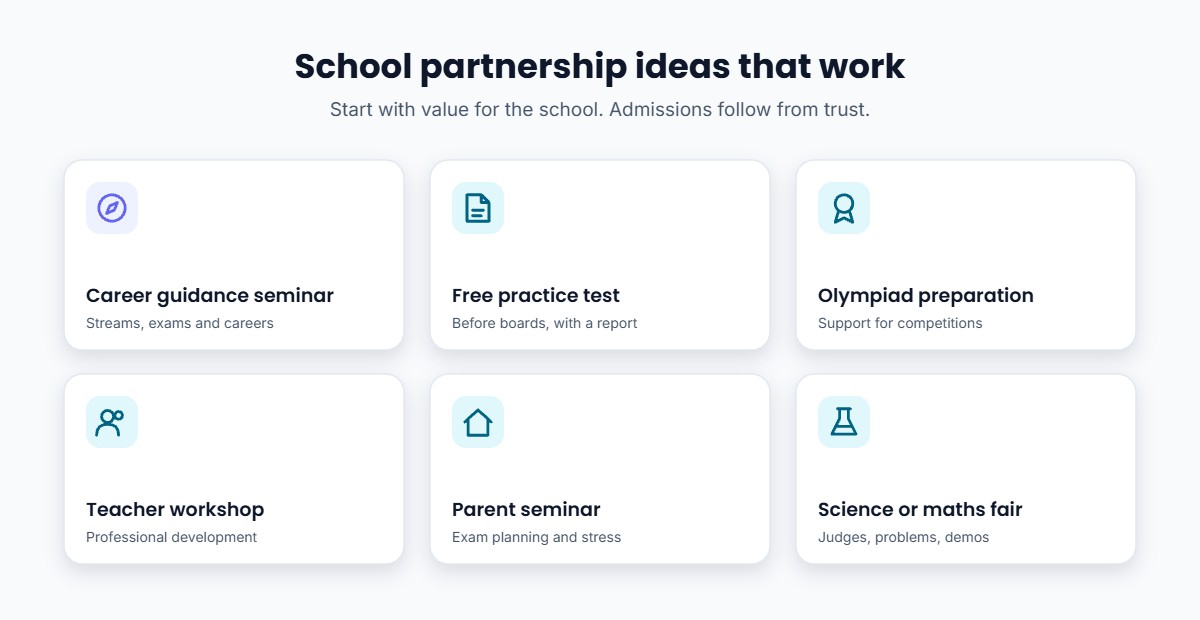
| Idea | What the school gets | What your institute gets |
|---|---|---|
| Career guidance seminar | Expert session on streams, exams and careers | Trust with students and parents |
| Free practice test before boards | Exam practice and a performance report | A sense of each student’s level; opt-in leads |
| Olympiad or quiz preparation | Support for competitions | Visibility with motivated students |
| Teacher workshop | Professional development | Credibility with school staff |
| Parent seminar | Guidance on exam stress and planning | Direct connection with parents |
| Science or maths fair support | Judges, problems or demonstrations | Brand presence at the event |
For more on running sessions that lead to enquiries, see how webinars can improve admission rates and these career guidance ideas for teachers.
How to Build a School Partnership: Step by Step
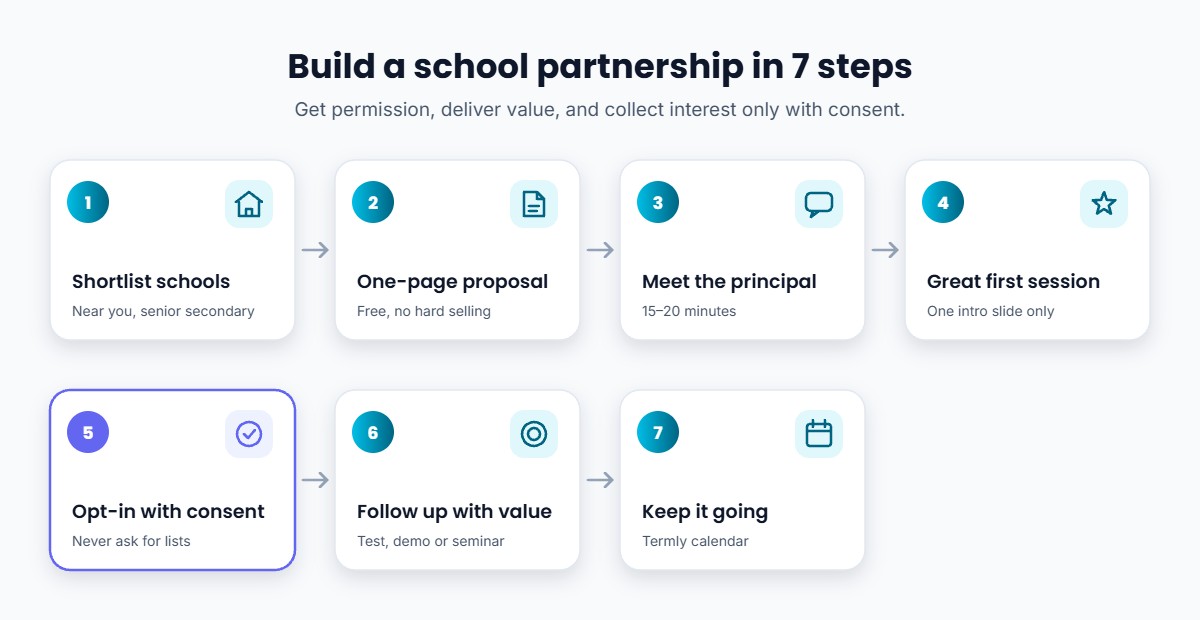
- Shortlist the right schools. Focus on schools near your centre, with the boards and classes you teach, especially senior secondary.
- Prepare a one-page proposal. What you’ll offer, how long it takes, what you need (hall, projector, a slot), and a clear note that it’s free and not a sales event.
- Meet the principal or coordinator. Ask for 15–20 minutes. Bring your faculty profiles, sample material and an outline of the session.
- Deliver an excellent first session. Make it genuinely useful. Keep your institute’s introduction to one slide at the end.
- Collect interest with consent. Use an opt-in form for students who want more information, and get parents’ consent for minors. Never ask the school for student contact lists.
- Follow up with value. Invite interested students to a scholarship test, a free demo class or a parent seminar.
- Keep the relationship going. Agree on a termly calendar, share a short report with the school after each activity, and thank the staff involved.
Compliance and Ethics Checklist
- Written permission from the school for every activity on campus.
- Consent before collecting any student or parent details, with a clear way to opt out.
- Age and class rules: the 2024 central coaching guidelines say coaching centres shouldn’t enrol students below 16 or before they pass the secondary school exam. Check how your state applies this (see our guide to coaching institute registration).
- Honest messaging: no rank guarantees or misleading claims in slides, brochures or follow-ups.
- No attendance arrangements that take students out of school.
- Safety: follow the school’s rules on visitors, timing and supervision.
Measure What Each Partnership Brings
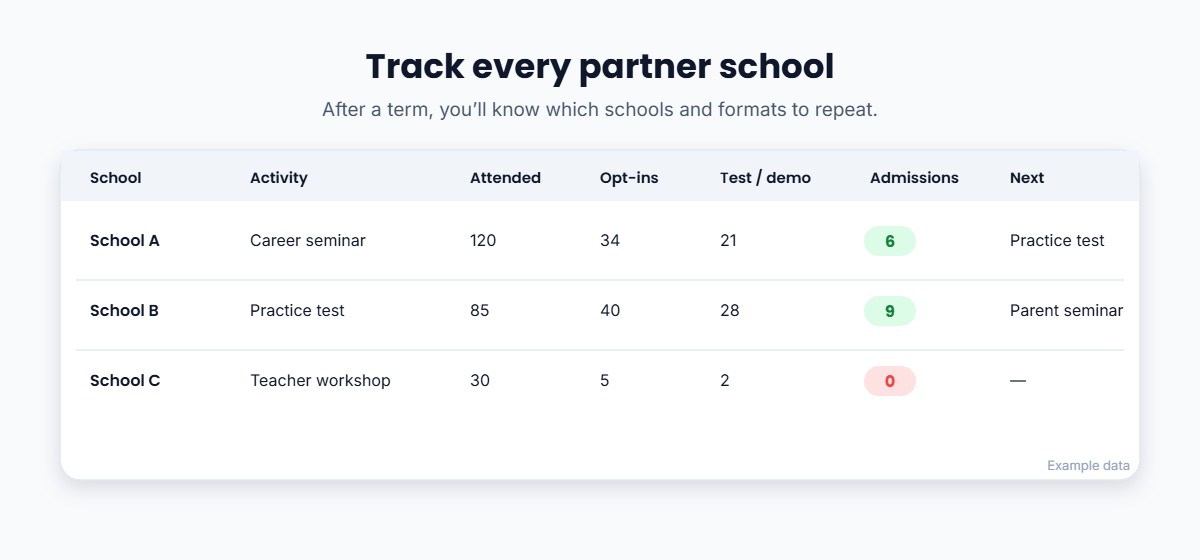
Track every school separately:
| Stage | What to record |
|---|---|
| Activity | Date, type of session, number of students attending |
| Interest | Opt-in forms received |
| Engagement | Scholarship test or demo attendance |
| Admissions | Students who enrolled, and in which batch |
| Relationship | Next activity agreed with the school |
After a term, you’ll know which schools and which formats are worth repeating. Combine this with your referral program: students from partner schools often bring friends.
Common Mistakes to Avoid
- Turning a seminar into a sales pitch
- Asking schools for student phone numbers
- Overpromising results to impress principals
- One-off events with no follow-up plan
- Sending junior staff to represent the institute at important first meetings
- Not tracking which schools actually bring admissions
How Classplus Can Help
School partnerships work best when the follow-up is smooth. With Classplus, your institute gets its own branded app and website where interested students can:
- Take an online practice or scholarship test, with results available instantly
- Join a live seminar or watch the recording later
- See your courses and book a demo
- Pay fees online once they decide to join
You can send notifications about upcoming sessions and manage students and batches from one place. Every touchpoint after the school event carries your institute’s name.
Turn school events into admissions. Run tests, live seminars and courses from your own branded app. Explore Classplus →
Conclusion
School tie-ups work when they start with value: a career seminar students remember, a practice test that helps before boards, a workshop teachers appreciate. Get permission, respect consent, keep the selling light, and follow up with useful next steps like a scholarship test or demo class.
Done consistently, school partnerships become one of the most trusted ways to increase admissions, alongside your offline marketing.
Frequently Asked Questions
How can a coaching institute tie up with schools?
Offer something useful for free, such as a career seminar, practice test or teacher workshop. Present a one-page proposal to the principal, get written permission, deliver a high-quality session and follow up with interested students who opt in.
What can a coaching institute offer schools?
Career guidance seminars, free practice tests before boards, olympiad preparation, teacher workshops, parent seminars and support for science or maths fairs.
Can I collect student contact details at a school event?
Only with consent. Use an opt-in form for students who want more information, get parents’ consent for minors, and never ask the school to share student lists.
Are school tie-ups allowed under the 2024 coaching guidelines?
The guidelines focus on how coaching centres operate, including not enrolling students below 16 or before the secondary school exam, and avoiding misleading claims. Value-first activities with school permission are generally fine, but check your state’s rules.
How do I convert students from school seminars into admissions?
Follow up with a useful next step, such as a scholarship test, free demo class or parent seminar, then share course details and make enrolment easy.
How do I measure the success of a school partnership?
Track each school separately: attendance, opt-ins, test or demo participation, admissions, and whether a next activity is agreed.