You have prepared your notes, set up your laptop and blocked your evenings for classes. Now comes the hard part: finding students who will actually pay.
This is the most common problem for new online tutors in India, and most advice on it is a list of platforms to sign up on. That helps a little. What helps more is a simple system: a clear offer, a few reliable channels, and a process that turns inquiries into enrolments.
This guide explains how to get students for online tuition in 2026, with 12 practical methods, a simple conversion process and the mistakes that keep good teachers stuck with empty batches.
How to Get Students for Online Tuition: The Quick Answer
To get students for online tuition, define a specific offer (class, board, subject and outcome), then reach out personally to your existing network, run free demo classes or diagnostic tests, share short doubt-solving videos on YouTube and Instagram, set up WhatsApp Business, ask every happy parent for referrals, and track every inquiry until it converts.
The methods below are arranged roughly in the order a new tutor should try them: free and trust-based first, paid and scalable later.
Before You Start: Fix Your Offer
Most tutors struggle to get students not because they teach badly, but because their offer is vague. “Online tuition for all subjects, Classes 6–12” sounds like everyone else.
Write your offer in one sentence using this format:
I help [which students] with [which subject/exam] to achieve [which outcome] through [how you teach].
For example:
- “I help CBSE Class 10 students score higher in Maths through small live batches, weekly tests and a doubt session every Sunday.”
- “I help Class 11–12 students in Tamil Nadu prepare for NEET Biology through bilingual live classes and chapter-wise mock tests.”
A specific offer makes every method below work better. Parents instantly know whether you are the right fit.
Build basic trust assets
Before you start promoting, keep these ready:
- A short introduction video (60–90 seconds): who you are, what you teach and how your classes work.
- One sample lesson that shows your teaching style.
- A clear fee and schedule sheet that you can share as a PDF or link.
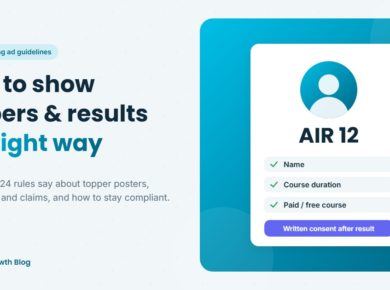
- Results and feedback, shared only with the student’s written consent taken after the result (plus a parent’s consent for minors, as good practice). The CCPA’s 2024 guidelines on coaching advertisements require this, and also prohibit guaranteed marks or selections and fake urgency.
12 Practical Ways to Get Students for Online Tuition
1. Start with your personal network
Your first students will almost always come from people who already know you. Make a list of 50 contacts: former students, parents from your past batches, colleagues, relatives and friends with school-age children.
Send each one a personal message, not a forwarded poster. For example:
“Hi Meena ji, I’ve started small online Maths batches for CBSE Class 9 and 10 this term. If you know any student who needs support, I’m running a free demo class this Saturday at 5 pm. Happy to share details.”
A message written to one person is far more likely to get a reply than a broadcast.
2. Turn every happy parent into a referral source
Referrals are one of the most reliable ways to fill online tuition batches in India, because parents trust other parents. Don’t wait for referrals to happen. Ask for them, and make it easy:
- Ask at the right time, such as after a good test result or at the end of a month.
- Offer a meaningful benefit, such as a free test series or a fee benefit for both families.
- Give parents a ready-made message they can forward.
3. Offer a diagnostic test instead of a generic demo
A free demo class shows your teaching style. A free diagnostic test does something more useful: it shows the student and parent exactly where the student is weak.
Share a short, personalised report after the test and explain how your batch will fix those gaps. This conversation often converts better than “Did you like the demo?” because you are solving a problem the parent can now see.
4. Set up a Google Business Profile (if you are eligible)
If you also teach from a physical location that students can visit, or travel to students’ homes for tuition, you can create a free Google Business Profile. It helps you appear when parents search for “maths tuition near me” on Google Search and Maps.
Note Google’s rules: purely online businesses with no location or service area are not eligible, and if you teach from home and travel to students, you should hide your home address and set a service area instead. Ask happy parents to leave honest reviews; never write fake ones.
5. Answer real doubts on YouTube
YouTube works well for tutors because students already search it for explanations. Don’t try to build a big channel overnight. Instead, create short videos that answer specific questions your students ask, such as “How to solve linear equations in two variables (Class 10)”.
Add your demo-class link in the description and pinned comment. We have written a separate guide on how teachers can monetise their YouTube audience.
6. Post short reels on Instagram
Parents and older students spend a lot of time on Instagram. Post 30–60 second reels: a quick concept, a common mistake, an exam tip or a student’s success story (with written consent). Keep your bio clear: what you teach, for which class and a link to book a demo. For more ideas, see how to sell your courses through Instagram.
7. Use WhatsApp Business and a WhatsApp Channel
Many tuition inquiries in India end up on WhatsApp anyway, so make it professional:
- Use the WhatsApp Business app with a business profile, working hours, automated greeting and away messages, and a catalogue of your batches.
- Save quick replies for common questions about fees, timings and syllabus.
- Organise chats with labels or lists (depending on your app version) such as “new”, “demo booked” and “enrolled”.
- Start a WhatsApp Channel to share one useful tip or question a day. Here’s how to create a WhatsApp Channel.
8. List yourself on tutor marketplaces (as a starting point)
Tutor marketplaces and listing sites connect students with tutors. They can help you get your first few students, especially if you have no audience yet.
Treat them as a starting channel, not your whole business. Read each platform’s fees and terms carefully, keep your profile specific, and focus on turning marketplace students into long-term relationships and referrals.
9. Join local and community groups
Parents discuss tuition in residential society groups, school parent groups and local community forums. Don’t spam these groups. Instead, answer questions helpfully, share a free resource occasionally and mention your batches only where the group rules allow it.
10. Offer a free resource in exchange for contact details
Create something genuinely useful: a chapter-wise formula sheet, a sample paper with solutions or a revision planner for board exams. Share it through a simple form that asks for the student’s name, class and phone number, with a clear note on how you’ll use their details.
Everyone who downloads it is a warm lead you can invite to your next demo class.
11. Run short workshops before exams
Two or three weeks before school exams or board exams, run a free one-hour revision workshop on a high-weightage chapter. Exam anxiety is high at that time, so attendance is usually better. At the end, explain what your regular batch covers and share the real start date and enrolment deadline for your next batch.
Our guide on selling courses through webinars explains how to structure these sessions.
12. Try paid ads only after your conversion process works
Meta (Facebook and Instagram) and Google ads can bring inquiries quickly, but they cost money. If your demo-to-enrolment process doesn’t work yet, ads will only help you waste money faster.
Start with a small daily budget, target parents in a specific city or region, and send people to one clear action, such as booking a free diagnostic test. Track the cost per inquiry and cost per enrolled student before increasing the budget.
How to Convert Inquiries into Enrolled Students
Getting inquiries is only half the job. Many tutors lose students between “interested” and “paid”. A simple four-step process helps:
- Reply fast. Respond to every inquiry the same day, ideally within an hour. A parent who asks three tutors often chooses the first one who replies properly.
- Understand the need. Ask about the student’s class, board, recent marks and biggest difficulty before talking about your fees.
- Show the plan. Explain how your batch works: schedule, tests, doubt support and how you’ll update parents.
- Make it easy to pay. Share a direct payment link with UPI and card options, and confirm the joining details immediately after payment.
Follow up politely after two days and again after a week. Many parents simply forget.
Track Your Numbers
Keep a simple sheet with these columns for every inquiry:
| Column | Example |
|---|---|
| Date | 12 Oct |
| Name and class | Riya, Class 10 |
| Source | Instagram reel |
| Status | Demo booked / Test taken / Enrolled / Not interested |
| Next follow-up | 15 Oct |
After a month, you will know which channel brings the most inquiries and which one brings students who actually enrol. Put more effort into what works and drop what doesn’t.
A quick note on privacy: you are collecting personal data, often about minors. Under India’s Digital Personal Data Protection Rules, 2025, you should tell people clearly why you are collecting their details, and processing children’s data generally requires verifiable parental consent. Keep lead lists secure and never share them.
Keep the Students You Get
The cheapest student to get is the one you already have. Retention directly affects how many new students you need each term.
- Send parents a short progress update every month.
- Test regularly and discuss results, not just marks.
- Notice when a student misses classes and check in early.
- Celebrate improvement publicly, with written consent.
Students who see progress stay longer, and their parents become your referral engine.
Mistakes That Keep Online Tutors from Getting Students
- Being too general. “All subjects, all classes” signals that you don’t specialise in anything.
- Discounting too early. Low fees attract price-sensitive parents and make it harder to raise fees later. Our guide on how to price an online course can help.
- Posting without a call to action. Every video and post should tell people what to do next.
- Slow replies. A late reply often means a lost student.
- Promising marks or creating fake urgency. Guaranteed results and “only 2 seats left” claims are misleading, and the CCPA guidelines prohibit them. Honest expectations build more trust.
- Looking unprofessional. Scattered PDFs, unclear fees and personal payment requests make parents hesitate.
How Classplus Helps You Look Professional and Fill Batches
Parents compare tutors quickly. When your classes, study material, tests and fee payments all live inside your own branded app, you look like an established institute, not a side project.
With Classplus, you can:
- give students your own branded app to join live classes and watch recordings,
- share notes and assignments in one organised place,
- run tests and track each student’s performance,
- collect fees online without chasing parents on chat,
- send notifications about classes, tests and new batches, and
- sell recorded courses to students outside your live batches.
That professional experience also makes referrals easier: happy parents recommend tutors who look organised and reliable.
Frequently Asked Questions
How can I get my first students for online tuition?
Start with people who already trust you. Message 50 contacts personally, including former students, parents and colleagues, and invite them to a free demo class or diagnostic test. Your first students will usually come from this network and their referrals, not from ads.
How do I get students for online tuition without paying for ads?
Use free channels consistently: referrals from happy parents, short doubt-solving videos on YouTube and Instagram, a professional WhatsApp Business profile, helpful participation in parent and community groups, and free revision workshops before exams. Track which channel brings enrolments and focus on it.
Are tutor marketplaces worth it for online tuition?
They can help you get your first few students when you have no audience. Read each platform’s fees and terms carefully. Use marketplaces as a starting channel while you build your own referrals, social presence and branded app, so your long-term growth doesn’t depend on one platform.
Can I list my online tuition on Google Maps?
Only if you meet Google Business Profile eligibility. You qualify if students can visit your physical location or you travel to students. Purely online tutors without a location or service area are not eligible. Home-based tutors who travel should hide their address and set a service area.
Should I give free demo classes for online tuition?
Yes, but make them purposeful. A free diagnostic test followed by a short personalised report often converts better than a generic demo, because it shows parents the student’s exact gaps and how your batch will fix them. Limit free sessions so they lead to a clear enrolment decision.
How long does it take to get students for online tuition?
It varies by subject, network and effort. Tutors who reach out personally, offer demos and follow up promptly often get their first students within a few weeks. Building steady, referral-driven demand usually takes a few months of consistent teaching, content and follow-up.
How much should I charge for online tuition?
Base your fee on the class and exam, batch size, level of support (tests, doubt sessions, parent updates) and what comparable tutors charge. Avoid underpricing to attract students. Our guide on how to price an online course in India explains a step-by-step method.
Conclusion
Learning how to get students for online tuition is less about finding a secret platform and more about building a repeatable system. Get specific about who you teach, start with people who already trust you, use diagnostic tests to show real value, stay visible on YouTube, Instagram and WhatsApp, and follow up on every inquiry. Then keep your students with visible progress, so every batch brings referrals for the next one.
If you are still setting up, read our step-by-step guide on how to start online coaching classes.
Ready to turn inquiries into a full batch? Classplus helps tutors run live classes, share material, conduct tests and collect fees from their own branded app, so every parent sees a professional online tuition experience.