Making good videos can help teachers to capture and retain students’ attention. Videos allow you to explain complex topics in simple ways, demonstrate how to perform tasks, and show off your product or service in action. But, before anything else you must know how to record videos for online classes.
In order to know how to record a video course, there are several ways to deliver lectures online. The most common method is through using a webcam to stream live video from a computer screen. Another way is to use screen casting software to record audio and video at the same time. This post will help you with both of those things and more.

The importance of video recordings in online courses
Video lectures or recording videos in online courses is important because it allows the students to revisit the content as they need and have the content saved in the form of video. Having video lectures also helps teachers to keep a record of their work and can even sell these video courses online.
- Video recordings enable instructors to provide real-time feedback to students.
- They also help learners understand concepts and retain information.
- There are different types of video recordings that instructors use in online learning. One type is a screencast another is a lecture capture.
- These recordings are then uploaded to websites and shared among students.
You can share your recorded lectures on your app. Making it easier for your students to access them anytime they want to. To know more, talk to our growth experts and get your app now!
Equipment required to record videos for online classes
1. Camera
Cameras can be categorized based on their size, resolution, features, and price. There are many different types of cameras, including DSLR, point-and-shoot, camcorder, video cameras, and action cameras. A good-quality camera should have at least 1080p HD recording capability.
2. Tripod
A tripod is a stable base that holds a camera steady while taking pictures or filming. Tripods are useful for both still photography and videography. Tripods allow you to take high-quality photographs without having to hold the camera perfectly steady.
3. Microphone
The Snowball Ice microphone produces excellent high-quality sound and can be a low-cost choice. If you’ve got a little extra cash to invest and want to make a studio-quality sound, then take a look at the Rode Podcaster.
4. Lavalier mic
If you film videos on your smartphone, you’ll need a decent mic to make sure the audio quality is good. This Rode SmartLav microphone is designed especially for use with smartphones and produces great quality sound.
5. Webcam
How to record videos for online courses with a webcam? Even though video recording software can make it easy to do so, it’s often better to actually speak into a microphone and then edit out any background noise later.
That way, you won’t have to worry about keeping track of where you’re speaking and what you’re saying. You also won’t have to worry too much about getting the audio levels right.
6. SoftBox lighting kit
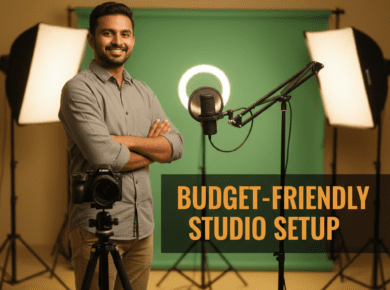
If you film videos in person, then you need to make certain you have good lighting to avoid poor-quality video. This softbox kit from Newer is perfect when you’re standing a couple of meters from the camera.
If you’re filming videos of yourself talking, then a ring light is probably best. You can put it in front of your camera so that it lights up your face, and you’ll get better results.
Setup required to record videos
The first step to making a video is setting up your camera and microphone. You want to make sure that you have enough room to move around freely without bumping into anything.
If you don’t have a tripod, then you may want to consider using something else to steady yourself. Make sure that the background isn’t distracting when doing screen grabs – these are great for editing later on.
- You can use any space that you have access to. Find somewhere that looks good and interesting.
- Make sure you have enough lighting, a tripod if you’re using one, and a camera.
- Your camera should be HD quality and at least 1080p.
- You’ll need a microphone to capture audio while filming.
- Lighting is an important aspect of video production. You’ll need lights to illuminate your subject and background.
- If you plan to add music to your video, you’ll need an audio recorder. An audio recorder records sound onto a digital file. You can either choose to do this manually or automatically.
How to ensure the audio and video quality?
How to record videos for online classes while ensuring your audio and video content remains competitive and consistent.
1. Audio and video
Your recording environment will dictate what additional equipment you’ll require to optimize audio and image quality. Select a quiet, well-lighted space and place your camera so that it records your head and shoulders and remains above eye level.
When working with audio and video, there are several things you must consider before beginning.
- Ensure that you have sufficient light in the area where you plan to record.
- Avoid any background noises that may interfere with your recording.
- Keep clutter out of the area where you’re planning to record.
These three simple steps will help you produce high-quality recordings that are ready to share with others.
How to record videos for online classes if background noise and bad lighting are a concern, then there are simple and affordable ways to improve the quality of the recordings.
a) External microphones
In order to enhance audio, there are inexpensive USB microphones that plug directly into your computer’s USB port. You can also purchase an external microphone that connects via an XLR cable.
b) Lighting
Ensure that your face is lit with soft light. You can do this by positioning a desk lamp or two in front of your computer.
c) Use the right techniques
When filming, try to ensure:
- You should hold your camera as steady as possible, preferably on a tripod or firm surface.
- Make sure you frame the subject appropriately. Your subject should be in focus and well-lit, taking advantage of any available natural light.
- Try not to move the camera during filming; instead, pan or rotate the camera slowly to achieve smooth motion.
- Voice-overs can be recorded in advance if needed. If you’re using voice-over, make sure the scripts are well rehearsed and you record them correctly, so they are easy to hear.
d) Select the right footage
You should choose footage that illustrates what you want to communicate about your course. It should also eliminate distracting backgrounds to make the message as easy to understand as possible.
e) Edit your footage
Your footage in various applications, such as Avid, Final Cut, and iMovie, which can all be downloaded online.
When you’re editing your footage, try not to do any of these things:
- jump cuts – only use crossfades or transitions for a reason; for example, to show the passage of time
- Transition and crossfade lengths should be uniform and consistent throughout the sequence. Keep your video and audio in sync throughout the sequence (this means keeping them synced in the same place)
- Your videos should be no longer than they need to be to deliver all the key information.
- Stabilize your handheld footage with an appropriate plug-in if necessary
f) Save your videos in high quality
You should save your videos in the highest quality possible and then convert them to different formats for different purposes. For example, you could convert them to.mp4 for uploading to YouTube.
g) Choose the right microphone
How to record videos for online classes by choosing the right microphone? You should use the right mic for the type of recording you are doing. Gun or rifle mics are good for recording speech or sounds without background noise. Lapel mics work best for interviews and links in quieter rooms. Always monitor your recordings or check the quality before starting.
A high pass filter (HPF) is an electronic circuit used to remove unwanted frequencies from an electrical signal. An attack time of 3 ms and a release time of 10 ms is recommended. Frequencies above 1 kHz can cause problems such as buzzing and popping.
h) Keep your equipment clean
Your equipment should always be kept clean. Dust particles can get lodged inside the components of your equipment and affect their performance.
Easy scripting for flowy online course videos
When you’re teaching a course, it’s almost impossible to do it off the top of your head. This is why it’s so important to spend some quality time scripting what you’re going to say. The best course speakers all come across as silky smooth, and that’s because they script their words.
Pro tip
While you’re scripting your course, make sure to read it out loud – you’ll find that you write plenty of things that you wouldn’t say, and those are those things that will sound awkward when you don’t cut them out.
To increase your chances of converting visitors into customers, make sure you follow these simple steps to produce high-quality videos.
1. Sketching out a script and planning the flow
Sketching out a script and planning the flow of the video and how each scene will play out is vital. From your speeches to texts and supporting images, everything must be planned and rehearsed before you begin shooting videos. Structure the material so your audience can easily understand your line of reasoning. Use slides to highlight your main points, but avoid cramming too much information into one slide.
2. Screen capture program
How to record videos for online classes with a screen capture program? In order to make good quality videos yourself, it is important to get a screen capture program. There are several freeware programs available online that can help you do so.
If you are prepared to spend money, you will have access not only to the basic features of these programs but also to more advanced ones. You can create even better material if you have the right tools.
3. Test your videos
After setting up audio equipment, take care of lighting and other aspects to record videos. Use this video to practice, analyze your speech and ensure you speak clearly and slowly. Once you’re done recording, you can start cutting out the sections you didn’t want.
When everything is finished, click upload, and your screen recorder will process and send your audio file to your video library.
4. Final record
If your video is ready, you may upload the materials on platforms such as YouTube or any other platform.
The best way is to upload your recorded videos on your app, making it easier for your students to access them anytime and anywhere. And if your screen capturing software includes video analysis, then take the time to evaluate how effective your recordings are.
For example, you might find that students give up watching a particular part, so edit the original video in the program to improve the learning experience.
Tips on how to record videos for online classes
You can easily lose focus and get lost in creating a course that contains too much information. When you’re creating the course material, keep asking yourself – is this piece of content vital to teaching the overall transformation?
If it’s not, then delete it. You’re aiming for clarity, simplicity, and structure, detail etc. where it matters. All delivered with your style, knowledge, and experience to support it.
Video is the best medium for learning – it’s the closest thing to learning face-to-face. You can either approach this from the perspective of creating a series of short videos, or you can create longer videos that cover the entire course. Whichever route you choose, make sure that the videos are clear and concise so that viewers can learn quickly and easily.